
Maintenance based on actual run-hours.
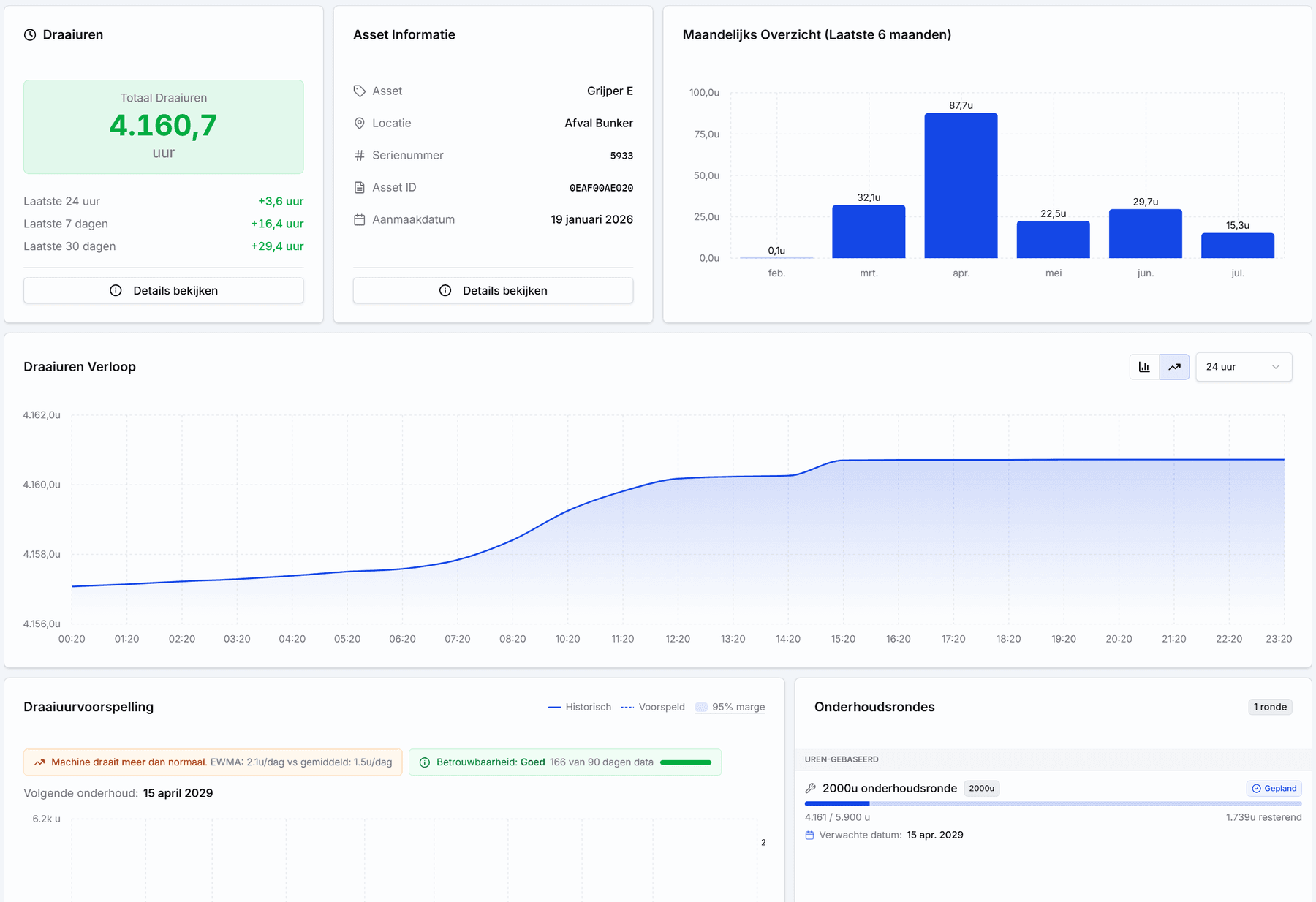
Stop manual inspection rounds and scattered registrations. TimeQeeper measures run-hours automatically through industrial sensors and consolidates everything into one clear platform — so you plan maintenance on actual usage instead of calendar assumptions.
- 100%
- Automatic tracking
- 24/7
- Continuously monitored
- 0
- Manual logging
From sensor to smarter maintenance, in four steps.
- 1
Mount the node
An industrial measuring node is placed on the machine without complex wiring. No modifications to the installation required.
- 2
Automatic detection
The node registers run-hours and starts via a current sensor or dry-contact signal — fully automatic.
- 3
One dashboard
Run-hours, starts and status come together automatically in the platform, per asset and per location.
- 4
Reports & maintenance
Automated reports and maintenance plans that follow actual usage instead of the calendar.
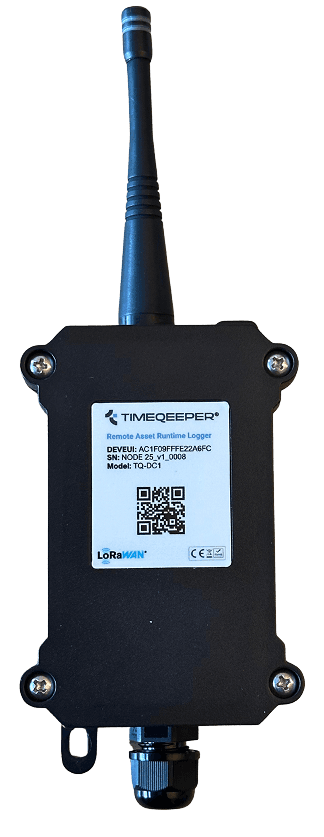
TimeQeeper node (TQ-DC1) — Remote Asset Runtime Logger
Industrial measuring nodes, built for the field.
The TimeQeeper node is a rugged, wireless data logger that registers run-hours on the machine itself. Data travels via LoRaWAN to a gateway; if the connection drops, the node buffers locally and transmits later.
- LoRaWAN
- Wireless — no complex wiring
- Local data buffer
- Gateway with 4G
- Current sensor or dry contact
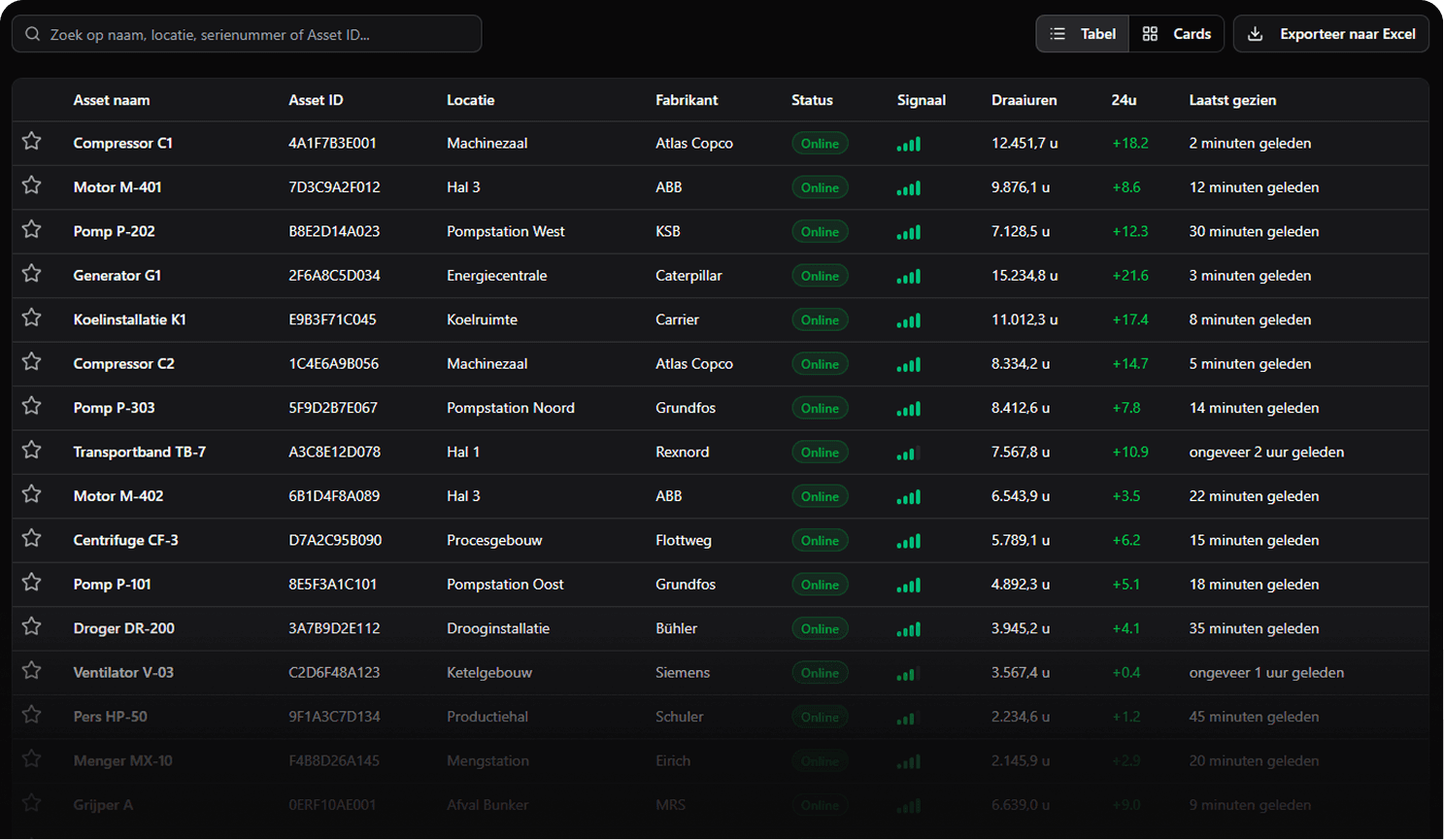
Up-to-date run-hours, per asset.
From the total overview down to the run-hour trend per machine: all runtime data in one place.
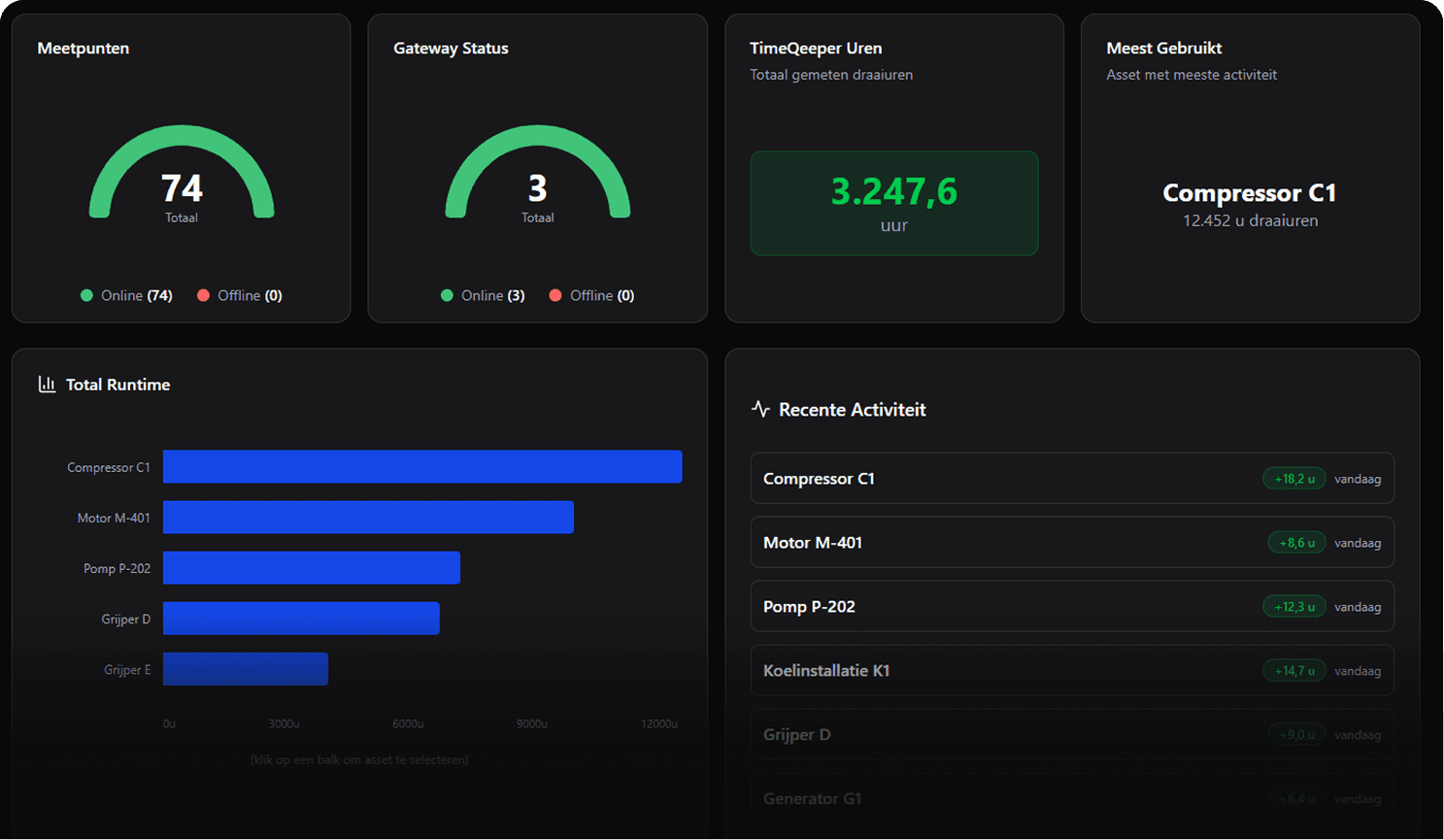
Dashboard — measuring points, gateways and totals
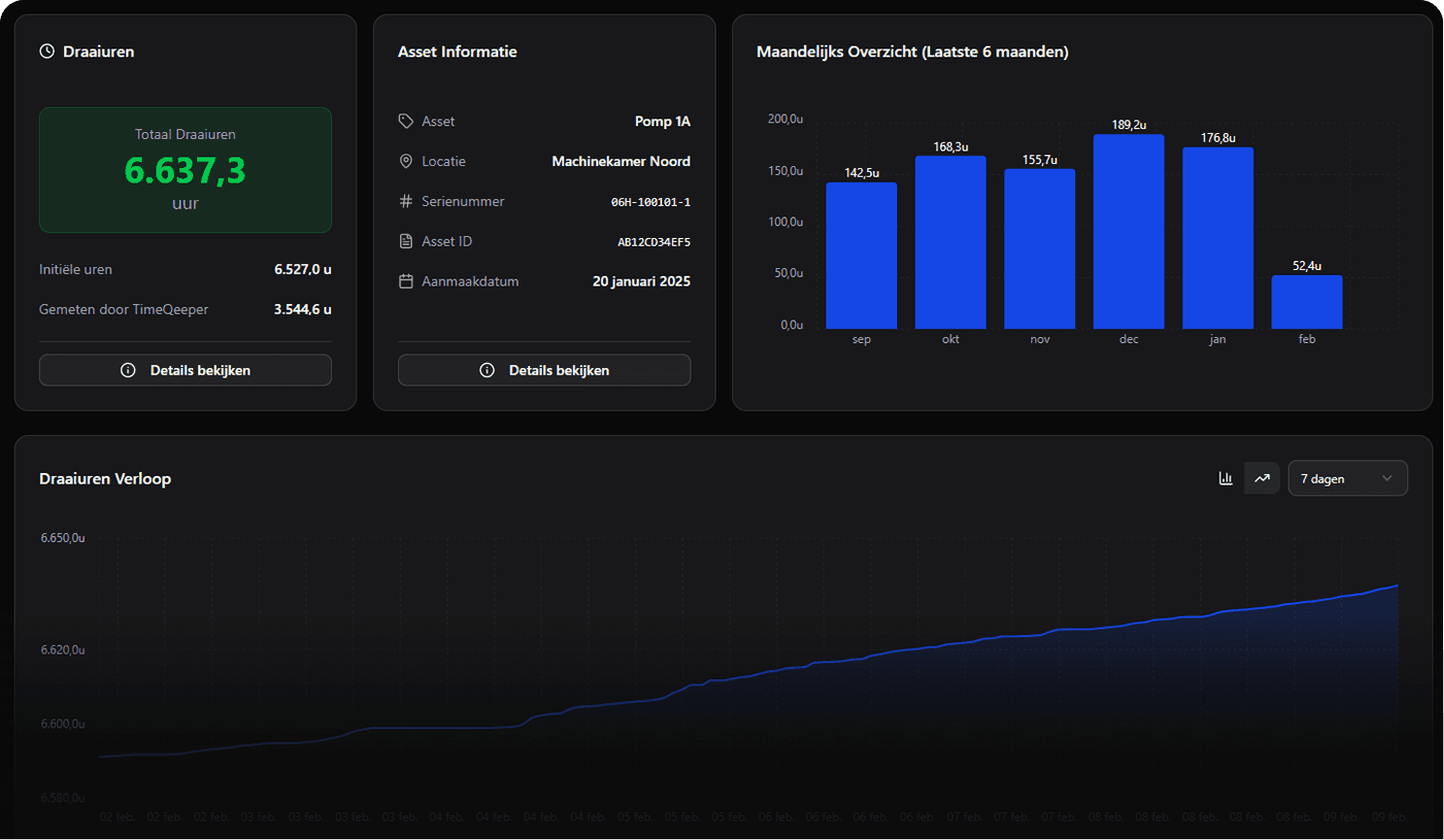
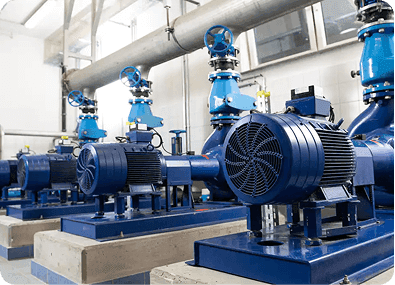
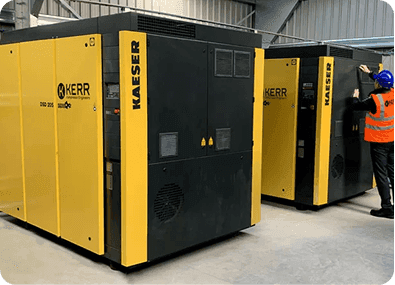
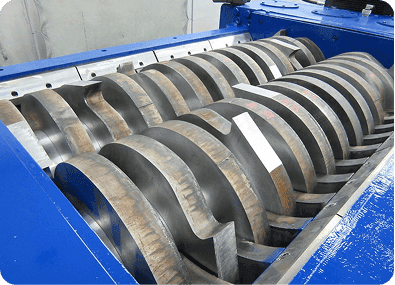
For every machine that runs.
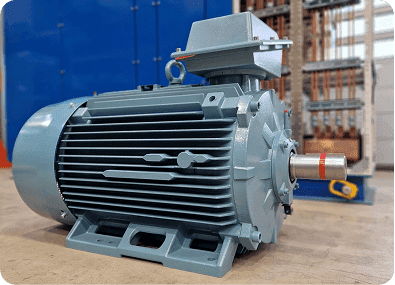
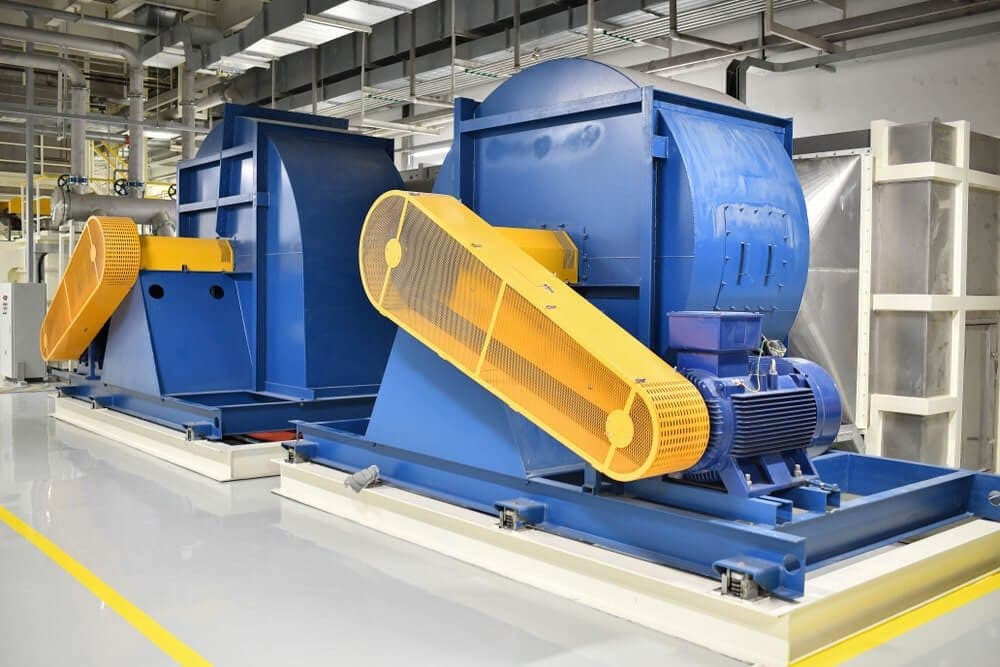

Run-hours are just the beginning.
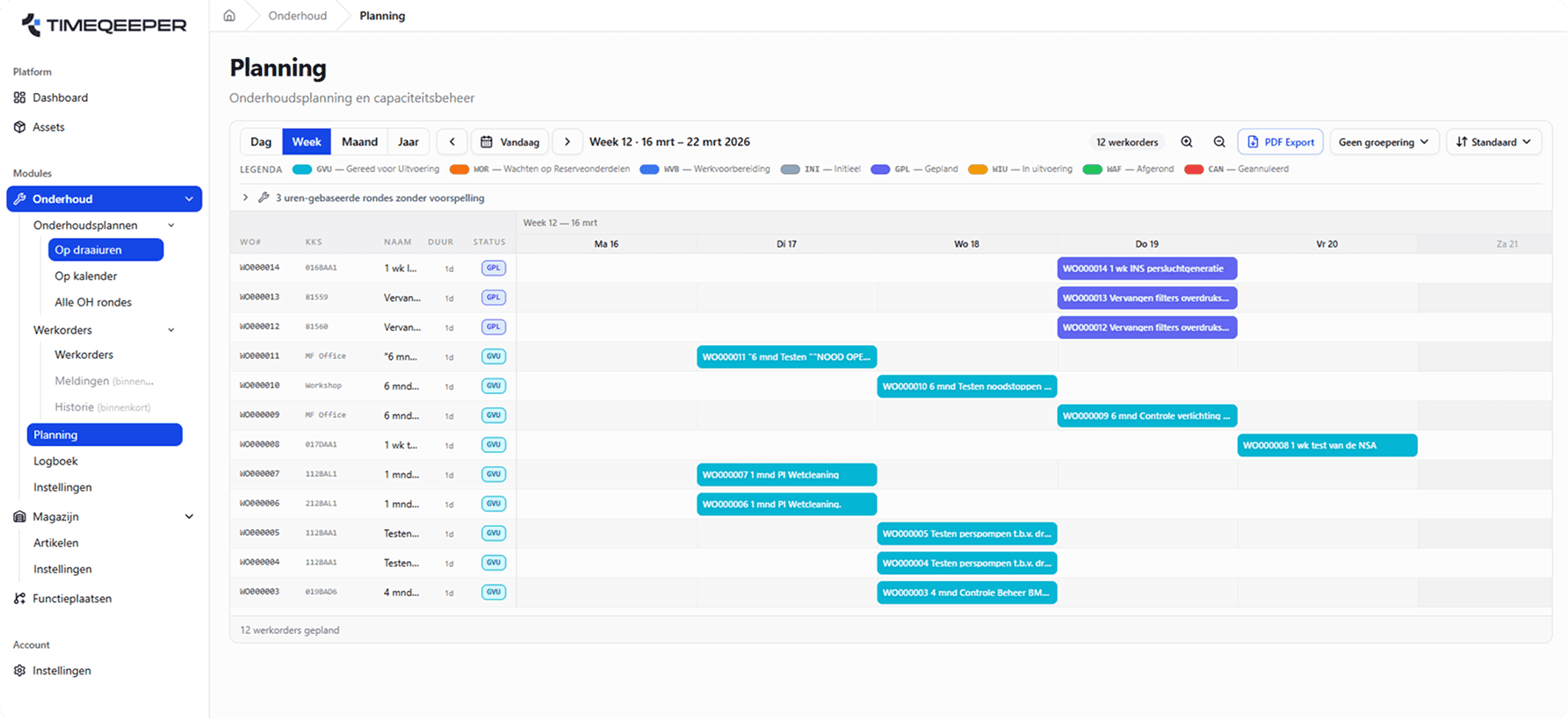
Within TimeQeeper, run-hours are a data layer in the broader EAM platform. Maintenance plans run directly on run-hours: work orders are created based on actual usage, with full history per asset.
- Maintenance plans on run-hours or calendar
- Work orders based on actual usage
- Full history and reporting per asset
Frequently asked questions about run-hours and monitoring
Do we have to modify the machine to measure run-hours?
No. The node is mounted externally, in the electrical cabinet or on an existing signal, and measures through a current sensor or dry-contact signal. No structural changes to the installation are needed.
How often are measurements sent?
That is configurable. Hourly by default, but it can go up to every minute, or send only when the machine changes state — depending on how critical the asset is.
What happens if the connection drops?
The node buffers measurements locally and sends them once the connection returns. You do not lose run-hours to a network outage.
Does TimeQeeper predict when an asset needs maintenance?
The platform projects forward from the measured consumption trend over the recent period, with a confidence band around it. That is a statistical calculation over your own measurement data, not machine learning, and it needs roughly a month of measurements before it becomes meaningful.
Further reading on this topic
Ready for more control over your maintenance?
Book a tailored demo. We'll show how TimeQeeper fits your assets, processes and team — and we'll get in touch quickly.