
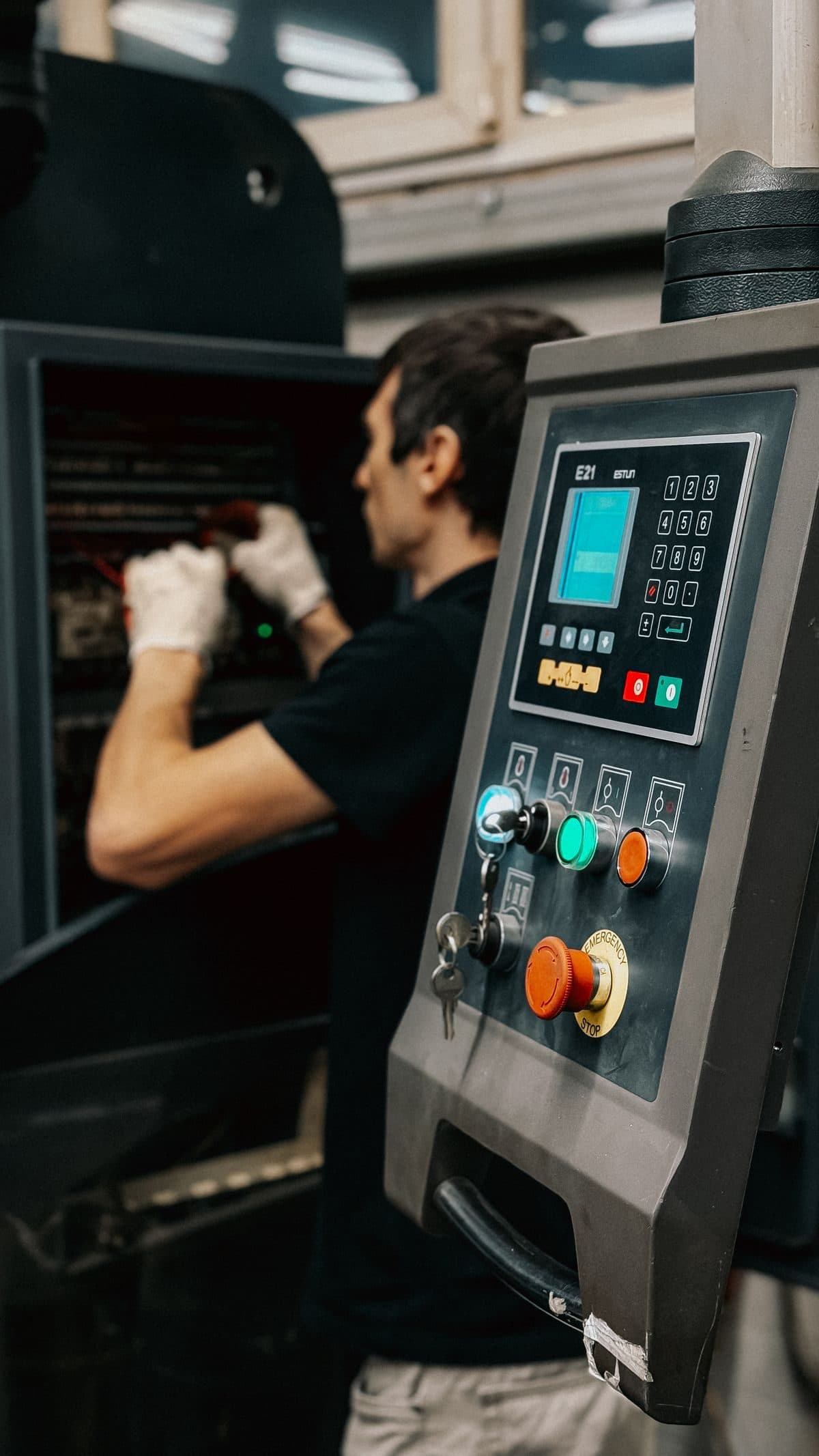
Work preparation is the translation of a maintenance need into an executable job: you decide what has to happen and make sure everything is ready before the technician starts. Materials, tools, labour, permits and a realistic time estimate are arranged in advance and recorded in the work order. It is the link between "we know this needs doing" and "this can be done today, efficiently and safely". The better that link is organised, the less time on the shop floor is lost to searching, waiting and walking back and forth.
What work preparation is and what the planner does
The work preparer sits between the request and the execution. He or she receives a fault report or a preventive task, assesses it technically, and makes the job ready to carry out. That means defining the scope, reserving the required parts, scheduling the right people and hours, and setting the safety measures. In many organisations this is a dedicated role; in smaller teams the planner or team leader handles it alongside other duties.
The heart of the role is bringing information together in one place. A technician who walks up to a machine without a drawing, without the right bearing and without a work permit not only loses time — he also makes decisions on the floor that are hard to check afterwards. The work preparer removes that uncertainty by completing the job in advance. The work orders and maintenance then state exactly what needs doing, with which resources and within which safety limits.
The steps in good preparation
Work preparation follows a fixed sequence, even though its depth varies per job. A planned overhaul goes further than a small corrective repair, but the questions are the same.
- Define the scope. What is the problem, which installation or asset is involved, and where does the job start and end? A sharp scope prevents work from overrunning because something turns out to belong to it that nobody anticipated.
- Labour and manpower. Which disciplines are needed — mechanical, electrical, an outside specialist — and how many people? Without this you risk one technician waiting for a second pair of hands.
- Materials and spare parts. Which parts are needed, are they in stock, and are they reserved for this job? This ties directly to spare parts management: good preparation falls apart if the part turns out to be missing on the day.
- Tools and equipment. Special tools, lifting gear, measuring instruments or scaffolding are arranged in advance, including inspection status.
- Permits and safety. Work permit, last-minute risk analysis, lockout/tagout of energy sources, and coordination with production about when the installation becomes available.
- Time estimate and scheduling. How long does the job realistically take, and when does it fit the schedule without pushing out the rest of the work?
Every step you skip returns as a delay during execution. This is exactly where planning and work preparation meet: planning decides when the work can happen, preparation decides whether the work can then actually go ahead.
Well prepared versus "just starting"
The difference between a prepared job and starting straight away is rarely visible in the first ten minutes. It becomes visible the moment the technician needs something that is not there. With "just starting", a chain of interruptions follows: walking back to the store, discovering the part has to be ordered, waiting for a colleague with the right authorisation, or having to restart the machine because the permit was not yet in place.
A prepared job avoids those interruptions, because the questions were answered before the tools were picked up. The technician works without stopping, the lead time is predictable, and the after-the-fact records are correct because what would happen was already set out beforehand. The difference is not in how hard people work, but in how much of that time is actually spent on the machine. In many maintenance teams the effective wrench time is surprisingly low; work preparation is the most direct way to raise that figure.
How preparation reduces downtime and failure costs
Downtime is expensive, and the most expensive downtime is downtime that lasts longer than necessary. When a fault occurs, what counts is not only the repair time but also the time until the repair can start. If parts, tools and authorisations are already arranged — or, for recurring faults, even staged in advance — you cut that lead-in time sharply.
Preparation also lowers the failure costs that arise after the job. Work carried out in a rush and incomplete more often leads to repeat failures, wrongly fitted parts or skipped checks. By putting the right specifications, torques and check points in the work order beforehand, the job is done right the first time. The Dutch maintenance association NVDO consistently points out that much of the gain in maintenance lies not in the execution but in the organisation around it — and work preparation is its pivot point.
Work preparation during planned shutdowns
During a planned stop or shutdown, work preparation becomes indispensable. A large number of tasks must be completed within a tight window, often with external parties and with the installation fully out of service. Every minute the installation stands still longer than planned costs production.
This is where preparation pays off most. All tasks are worked out in advance, parts are bundled and staged on site, tools and lifting gear are reserved, and the sequence of work is planned so that crews do not get in each other's way. The critical chain of tasks is made visible, so you know which job determines the duration of the whole stop. A shutdown that is well prepared runs to schedule; one that is not overruns, with all the lost production that entails. Preparation often begins weeks to months before the stop itself, and it is precisely that upfront investment that determines the length of the downtime.
Frequently asked questions
What is the difference between work preparation and planning?
Work preparation determines what is needed to make a job executable: scope, materials, manpower, tools and safety. Planning determines when that work is carried out and by whom. They belong together — a tight schedule has little value if the work turns out to be incomplete on the day.
Is work preparation only needed for large jobs?
No. The depth scales with the job, but the questions stay the same. Even for a small repair you want to know whether the part is in stock and whether a permit is required. For simple, recurring tasks you can standardise the preparation in a template.
How much time should you spend on work preparation?
As a rule of thumb, every prepared job pays back in less delay during execution. The ratio varies by situation, but for planned shutdowns and complex repairs the preparation time is more than offset by the downtime and repeat failures avoided.