
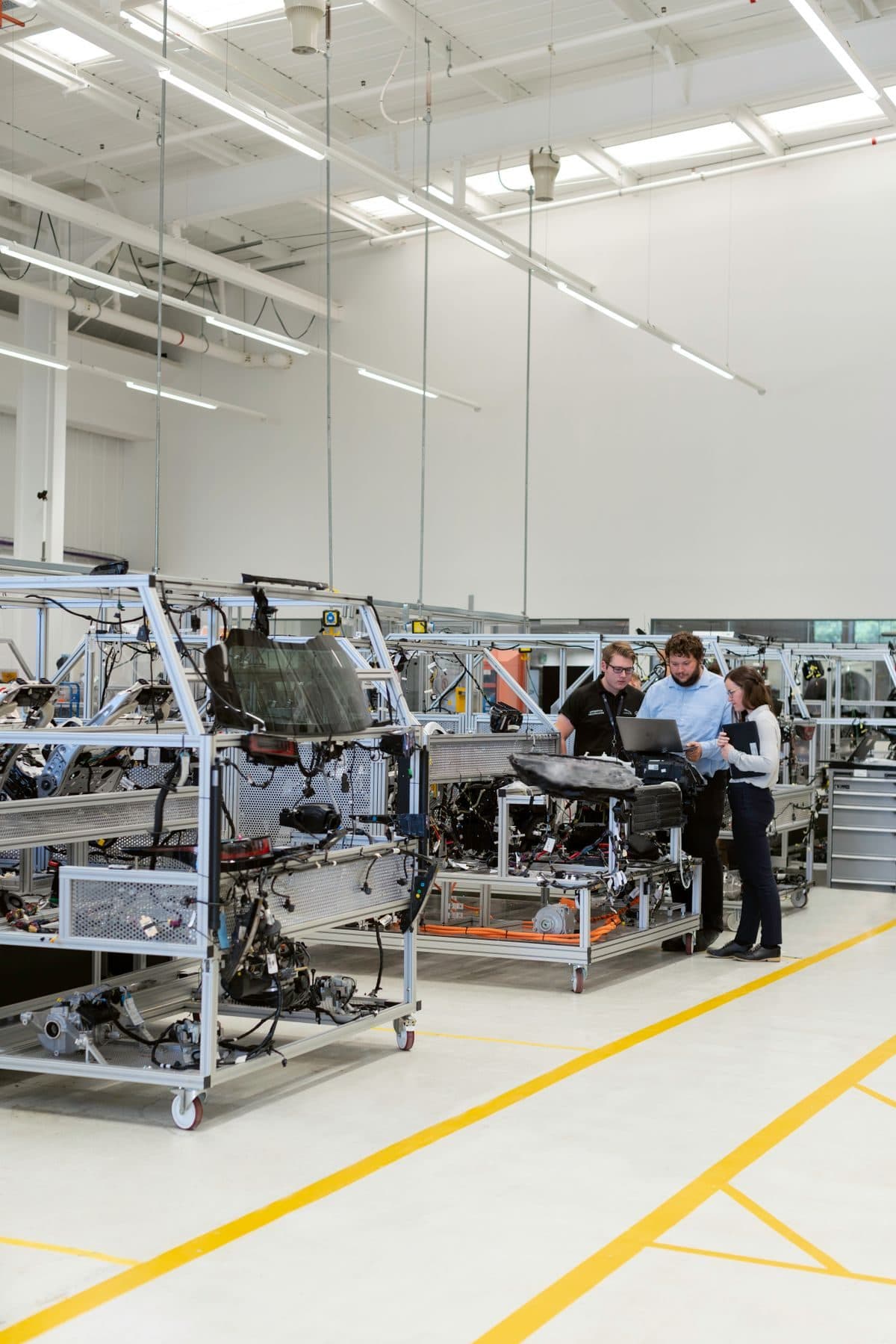
TPM (Total Productive Maintenance) is a maintenance philosophy from Japanese industry in which operators, maintenance technicians and management share responsibility for the effectiveness of machines and equipment. The core idea: maintenance is not just a job for the maintenance department, but for everyone who works with the machine. The goal of TPM is to eliminate losses — breakdowns, changeover time, speed losses, defects — measured with OEE (Overall Equipment Effectiveness).
The "total" in the name refers to people, not machines: total involvement of the whole organisation in productivity and maintenance.
Origins: Japan, 1970s
TPM emerged in 1970s Japan, at suppliers to Toyota. Seiichi Nakajima of the Japan Institute of Plant Maintenance developed it into a structured methodology and later introduced it to the West. TPM is closely related to the Toyota Production System and to what we now call lean: the same focus on eliminating waste, the same involvement of the shop floor. Where lean looks primarily at the flow of the entire process, TPM focuses specifically on the machine and the people around it. You can find more background on Wikipedia's TPM page and at the Lean Enterprise Institute.
The goal: eliminating losses
TPM targets the "six big losses" of any piece of equipment:
- Breakdowns — unplanned downtime due to failures
- Setup and adjustment — planned but avoidably long stops
- Minor stops — interruptions of seconds or minutes
- Speed losses — the machine runs, but slower than designed
- Defects and rework — output that is not right first time
- Start-up losses — scrap and adjustment losses after a start or changeover
All of these losses come together in a single number: OEE. More on that below.
The pillars of TPM
TPM is usually described through eight pillars. The most important ones:
- Autonomous maintenance — operators take over first-line care of their machine (explained in detail below)
- Planned maintenance — the maintenance team works systematically: inspections, lubrication and replacements at fixed intervals or based on condition, instead of reacting to failures. See also preventive vs corrective maintenance
- Focused improvement (kaizen) — cross-functional teams tackle the biggest losses structurally, starting from data
- Training and education — operators and technicians build the knowledge and skills their broader roles require
- Quality maintenance — machine conditions that cause defects are identified and controlled, so quality is built into the process rather than inspected at the end
- Safety, health and environment — a clean, organised and safe workplace is both a precondition for and a result of TPM
In addition, "early equipment management" (bringing maintenance knowledge into the purchase and design of new machines) and "TPM in administration" (applying the same principles to supporting processes) are often listed.
Autonomous maintenance: the most distinctive pillar
What truly sets TPM apart from traditional maintenance is autonomous maintenance (jishu hozen). Operators carry out first-line care of their machine themselves:
- Cleaning — and cleaning here means inspecting: whoever cleans daily is the first to spot leaks, loose bolts and wear
- Inspecting — daily or weekly checks against a checklist: vibrations, sounds, temperatures, fluid levels
- Lubricating — basic lubrication to standard, at fixed points and intervals
- Reporting anomalies — anything the operator cannot fix goes straight to the maintenance team as a notification
The logic behind it: the operator stands next to the machine eight hours a day. Nobody notices a changing sound or an early leak sooner. By catching those signals early, you prevent small anomalies from growing into major breakdowns. Autonomous maintenance follows a step-by-step path: first deep-clean and restore basic condition, then eliminate sources of contamination, then set standards for cleaning and lubrication, and only then move to independent inspection.
What changes in the division of roles?
TPM shifts work between operator and technician:
- The operator handles routine care (cleaning, lubricating, simple inspections, minor adjustments) and reports anomalies early. They know "their" machine and feel ownership of it.
- The technician is relieved of simple routine work and gains time for specialist work: complex repairs, overhauls, failure analysis and improving maintenance plans. Technicians also train and coach operators.
- Management facilitates: scheduling time for maintenance, taking improvement suggestions seriously and making results visible.
Maintenance does not become a handover of responsibility, but a collaboration with clear agreements on who does what.
TPM, OEE and your CMMS
OEE is TPM's yardstick. OEE combines availability, performance and quality into a single percentage and shows where the six losses occur. Without measurement, you don't know which loss to tackle first or whether improvements are working. Read more about what OEE is.
A CMMS (computerised maintenance management system) supports TPM in practical ways:
- Recording standard tasks and checklists for autonomous and planned maintenance, so everyone follows the same steps
- Capturing operator notifications directly and routing them to the maintenance team, with photos and context
- Building history per machine: which failures recur, what the downtime cost, which preventive work pays off
This way, the knowledge in the heads of operators and technicians is captured and made reusable. More about work orders and maintenance.
An honest caveat: TPM is a culture change
TPM is not a tool you install, and not a one-quarter project. It requires a different view of work: operators taking responsibility for their machine, technicians sharing knowledge instead of guarding it, management freeing up time and resources. Expect it to take years before TPM is fully embedded — and expect resistance along the way, because "maintenance isn't my job" is an understandable first reaction.
So start small. Pick one line or one critical machine, begin with autonomous maintenance and OEE measurement, and make improvements visible on the shop floor. Success on one line convinces people more than a company-wide programme on paper.
Frequently asked questions
What is the difference between TPM and preventive maintenance?
Preventive maintenance is a maintenance strategy: performing planned work before a failure occurs. TPM is broader — a philosophy in which preventive maintenance is one pillar, alongside autonomous maintenance by operators, focused improvement, training and safety. You can do preventive maintenance without TPM; TPM without planned maintenance is not possible.
Do operators take over the technicians' work under TPM?
No. Operators handle first-line care: cleaning, inspecting, lubricating and reporting anomalies. Complex repairs, overhauls and failure analysis remain with the maintenance team. Technicians actually gain more time for specialist work because routine tasks sit with the operator.
How long does it take to implement TPM?
A first pilot on one line often shows visible results within a few months, such as fewer minor stops and a higher OEE. Full implementation across the organisation takes years, because TPM changes behaviour and culture — not just procedures.